
Shipping & delivery

Sampann — Gourmet Diwali Gift Hamper | 13 Items with Dry Fruits, Granola, Cookies, Chocolates, Tea & Coffee
Nine things to eat and drink in one Diwali box
Most Diwali hampers in this bracket are dry fruit and a chocolate, padded out with packaging. This one is thirteen items and nine of them are food: 50g each of almonds, cashews, pistachios and raisins in four separate printed cartons, a jar of granola mix, a jar of double chocolate cookies, six chocolates, and 20g each of tea and coffee.
That range is the point. A dry fruit box gets picked at once and put away. This one covers the morning coffee, the tea when visitors arrive, the granola on the sideboard, the cookies the children find, and the nuts that go out on the tray — which is how a Diwali week is actually eaten.
The other four items are the ones nobody else includes: three havan cups and six dhoop cones for the puja, a jute toran worked in gold zari for the doorway, and a greeting card printed with your own message. Everything is sealed in its own carton or jar, in a rigid kappa board box with a lift-off lid and a gold-foil mark.
Rs. 1,399
Estimated delivery by —
Secure checkoutUPI · Cards · NetbankingGST invoiceDamage-free promise
Ordering 25+ for your team? Get bulk pricing →

Rs. 1,399
Hand-packed in Kolkata
Every ribbon tied by a person, not a machine
Free personalisation
Name, note & card included on every order
Damage-free promise
Broken in transit? We reship free, no questions
02 · Good to Know
Before you gift it
Everything worth knowing — sizes, shelf life, branding, shipping — in one place.
Bulk & branding
From 25 units: logo on the box, branded ribbon and a custom card. GST invoice on every business order — see corporate gifting for tiers and sampling.
Care & sustainability
The keepsake box is reusable and all packaging is plastic-free kraft and cloth. Explore the full eco-friendly gift range.
Product details
Description
What's inside
Specifications
- Gift box - One rigid kappa board box with a lift-off lid, matte black, with a bronze satin ribbon and a gold foil printed mark on the lid
- Almonds - 50g, in a printed carton
- Cashews - 50g, in a printed carton
- Pistachios - 50g, in a printed carton
- Raisins - 50g, in a printed carton
- Granola mix - 100g, in a screw-lid jar
- Double chocolate cookies - 100g, in a screw-lid jar
- Tea - 20g, in the Tea and Coffee carton
- Coffee - 20g, in the same carton
- Chocolates - 6 pieces, in the Edible Treats carton
- Havan cups - 3 pieces, in a printed carton
- Dhoop cones - 6 pieces, in a printed carton
- Jute toran - One eco-friendly door hanging, jute mesh worked in gold zari with a red velvet border and red bead strings, supplied rolled
- Greeting card - One Diwali card printed with your own message
- Packaging - Contents seat in cream shred filler in a single open tray; no plastic insert and no moulded compartments
- Allergens - Contains tree nuts: almonds, cashews and pistachios. The chocolate, cookie and granola compositions have not been specified to us, so ask before ordering if allergies are a concern
- Dispatch - Ready to ship
- Personalisation - Your mark prints on the box lid and your message on the greeting card
- Pricing - Bulk pricing shared on request once quantity, branding requirement and delivery date are confirmed
Item info
Perfect for
Additional information
Returns
Please note
FAQs
Questions, answered
121What food is inside this gourmet Diwali hamper?
Thirteen, nine of them edible: 50g each of almonds, cashews, pistachios and raisins, 100g granola, 100g cookies, 6 chocolates, 20g tea, 20g coffee, plus puja items and a toran.
2Does this Diwali hamper include puja items?
Yes, and it is the point of it. Three havan cups and six dhoop cones, the two things every household runs out of on the day of the festival and almost nobody thinks to gift.
3Are the dry fruits packed together or separately?
Separately. Almonds, cashews, pistachios and raisins each come in their own sealed printed carton at 50g, so one can be opened without exposing the other three.
4What is the box made of?
Rigid kappa board with a lift-off lid, matte black, finished with a wide bronze satin ribbon and a gold foil printed mark on the lid. Contents seat in cream shred filler.
5Does the hamper come with diyas?
No. Diyas appear in the photographs as festive styling alongside the rangoli and marigolds, but they are not part of the hamper. The thirteen items listed above are what ships.
6Does this hamper contain nuts or other allergens?
Yes, tree nuts: almonds, cashews and pistachios. The chocolate, cookie and granola compositions have not been specified to us, so check with us first if that matters.
7Can our company logo be printed on the box?
Yes. The lid is already gold-foil printed with our own mark, so the method on this material is proven rather than promised. Yours replaces ours in the same position.
8Can we add our own message to the greeting card?
Yes. The card is printed with your wording rather than a generic festive line. Send us the message with your order and we will show you a proof before printing.
9Can we order these in bulk for employees and clients?
Yes, and it is ready to ship rather than made to order. Send your headcount and delivery dates on WhatsApp and we will confirm the schedule in writing.
10Can you deliver to multiple addresses on one order?
Yes. Individual home addresses across India, several offices, or a mix, on a single order with one invoice and tracking throughout.
11Is this a mid-range Diwali gift or a luxury one?
Mid-range, deliberately. It is what you send when the list is too long for a luxury box but the recipients are too senior for a token gift.
12How early should a corporate Diwali order be placed?
As early as you can. This hamper carries food, so it has dates on it, and branding adds an approval step. Share your headcount and delivery dates and we will work backwards.
You May Also Like
More stories to gift




Cork Prime 4-in-1 — Premium Cork Gift Set for Corporate Gifting
1. All-cork exterior across all 4 pieces, with brushed metal hardware on...
Rs. 1,449
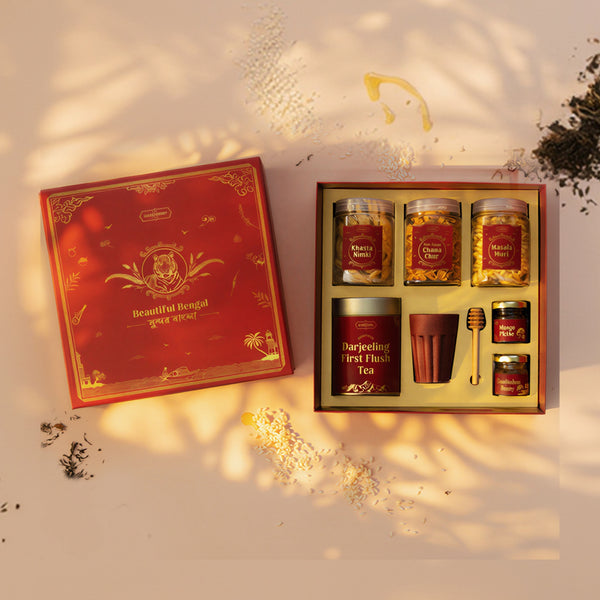
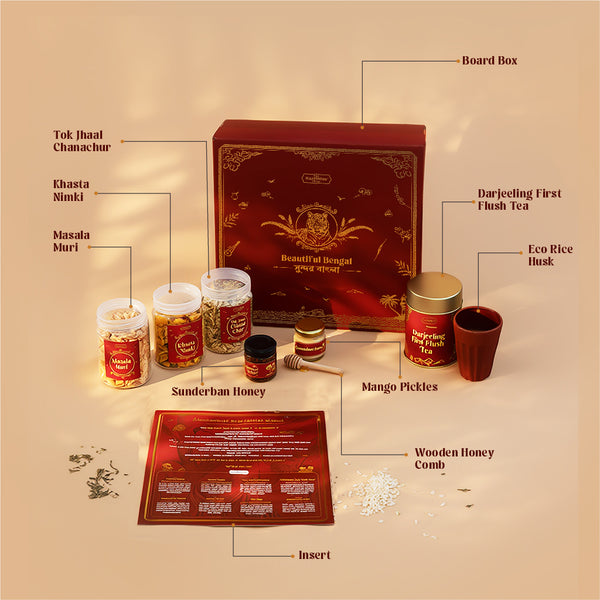
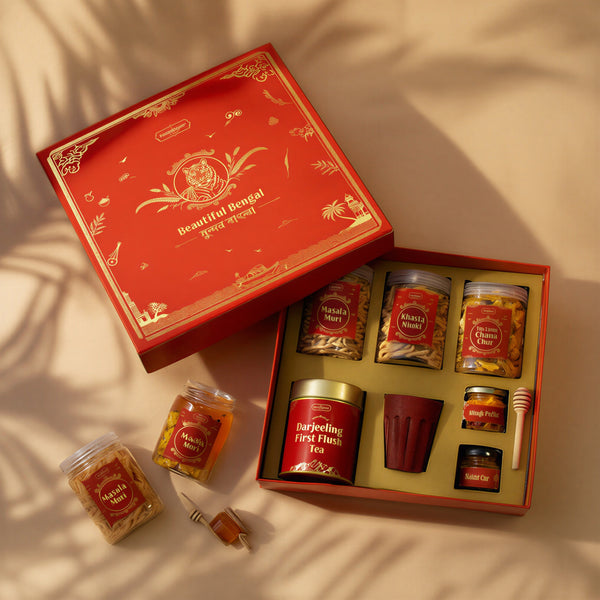

The Beautiful Bengal Box
What makes The Beautiful Bengal Box different from any other gift hamper...
Rs. 999 Rs. 1,499


Shagun — Diwali Potli Gift Hamper | Almonds, Cashews, Pista, Chocolates & 2 Hand-Painted Diyas
1. The Diwali Gift Whose Packaging Outlives the Festival The potli is...
Rs. 499
25% OFF


Baithak — Eco-Friendly Diwali Gift Hamper
WHY THIS WORKS AS A DIWALI GIFT It gives them the evening,...
Rs. 1,499 Rs. 1,999
Recently Viewed